.jpg)
I’ll let you in on TED’s worst-kept secret: TED is not a person, but an anagram. It stands for Technology, Entertainment and Design. The conference is a playground for anyone who is curious about how tech is reshaping our lives — from its wondrous possibilities to terrifying contingencies — as the digital world evolves at an accelerating pace.
The world is changing, and it will take All of Us to get it right. Today at TED2026, I spoke to an interdisciplinary collection of experts to hear what they think about the path we’re on — and what we can do to make sure we build a future that works for everyone.
Here’s what an artist, an inventor, an entrepreneur, a neuroscientist and a designer taught me about the exhilarating world ahead.
You have more control than you think.
The throughline that almost every speaker touched on — explicitly or implicitly — is that you need to actively choose your relationship with technology. With AI everywhere you turn and robots getting more indiscernible from humans every day. But you have choices: where you spend your time, who you engage with, what you speak up about.
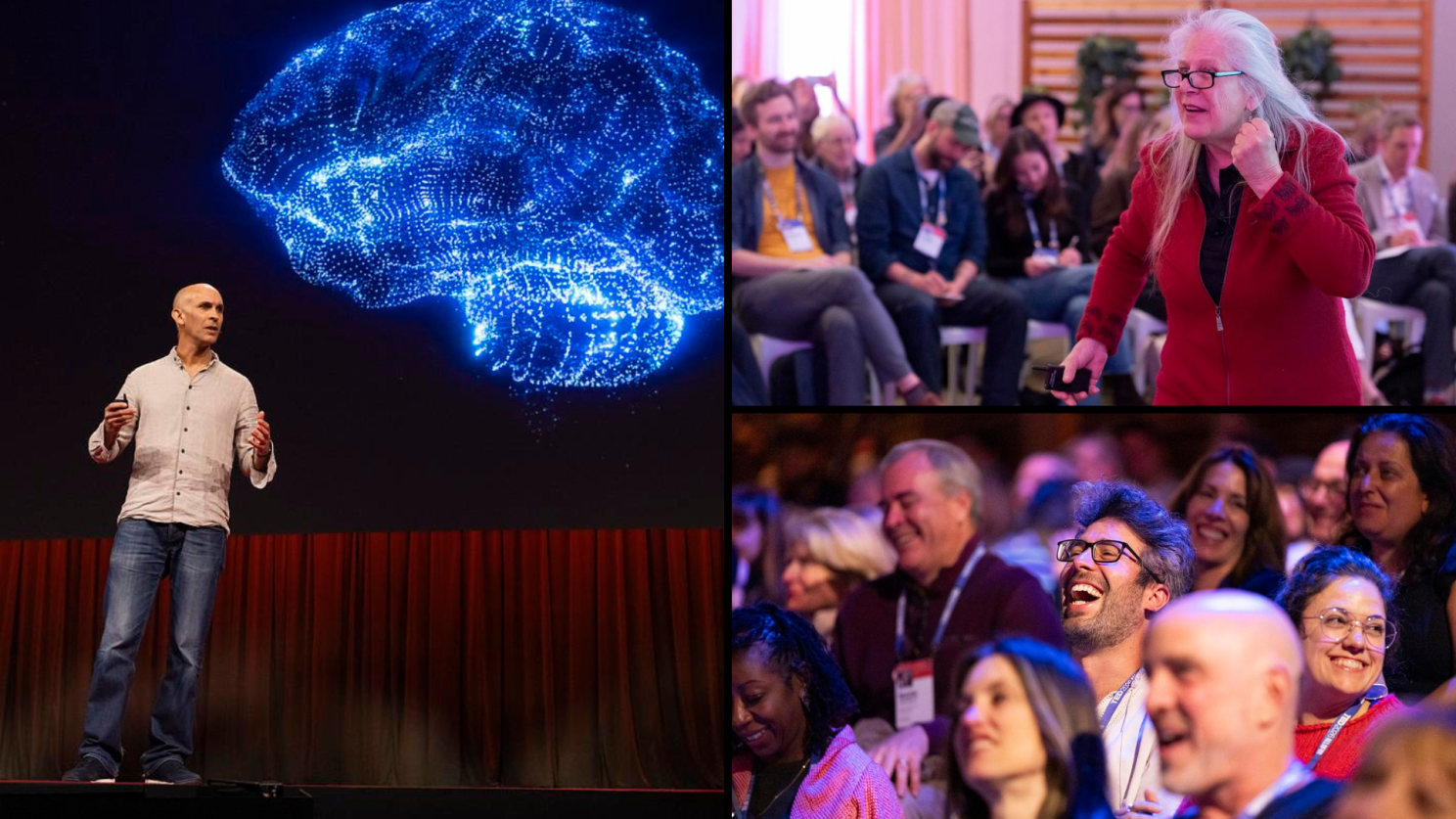
“We're not human anymore. We are this combination of technology with our humanness,” said neuroscientist and TED speaker Jill Bolte Taylor.
“So first of all,” she continued, “there's no point in resisting it. It is here. It is moving a million miles an hour in our world. And I think it becomes a matter of how do we recognize what fuels us in a positive way, what fuels our humanity, and what takes away from it?”
Overwhelmed? Me too. Here’s three tips to take back control of your technological life and build a future worth fighting for:
1. Experiment and find your boundaries
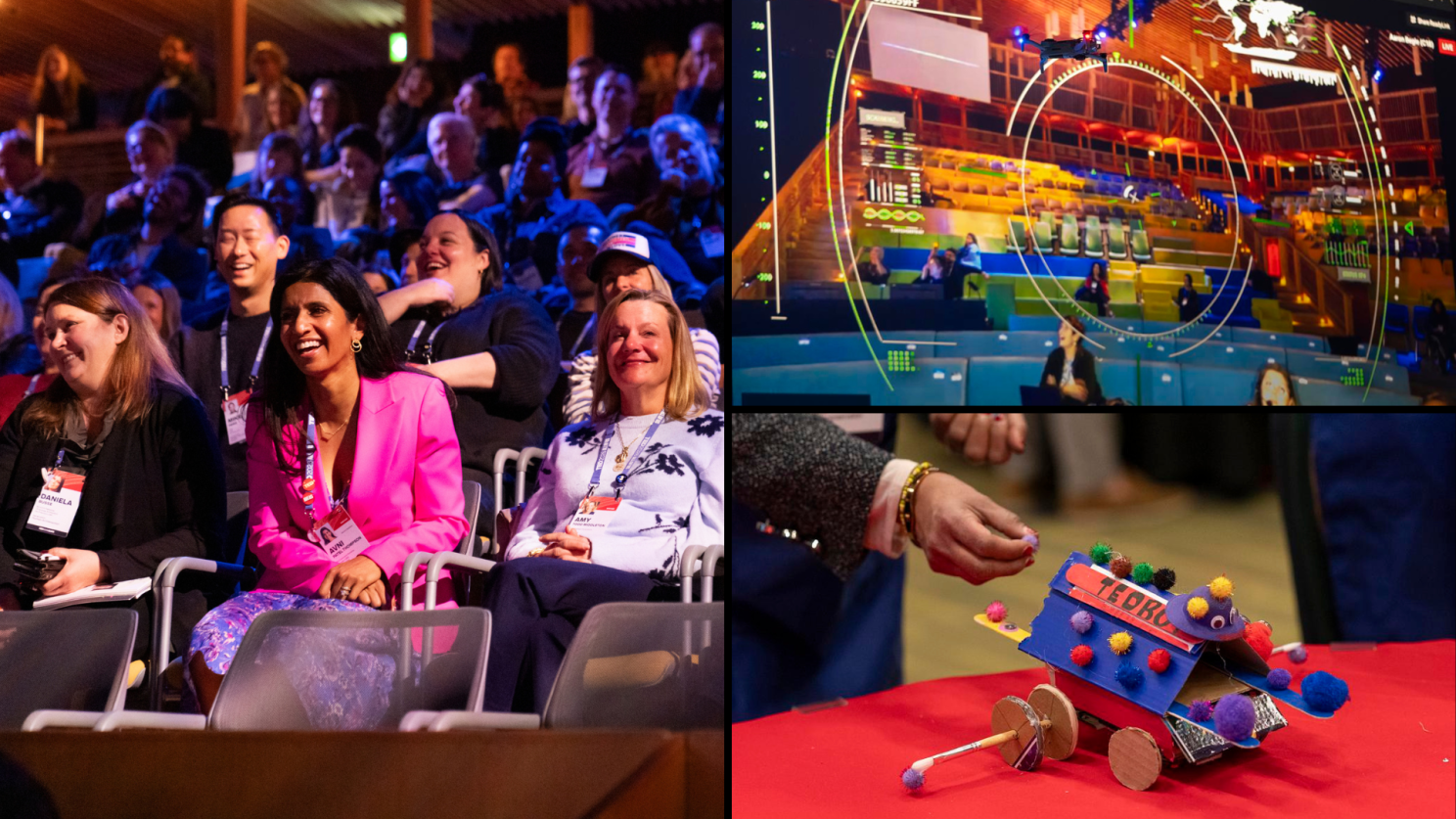
“I think it's really important to just play, be playful and experiment with things,” advises Avni Patel Thompson, founder and CEO at Milo and a TED speaker. Try out certain apps, tools or technologies and then ask: How do you feel? Does it make you feel more connected? Or less?
It’s impossible to be perfect, and every individual has their own line. It’s important for you to experiment and find your own boundaries and preferences around how much you want technology in your life. Trust your intuition of what you need.
Thompson asks the ultimate question: How do we create spaces to build intuition and discernment and these boundaries — without shutting ourselves off from the incredible potential?
“Having a safe space to just throw ideas out and have them be caught and be shared and looked at is an incredible gift, because when we're trying to do really hard things, that's often the difference between progress and then just sort of staying in your head,” Thompson shared.
2. Identify pain points — and speak up
As you experiment and find your line, don’t be afraid to speak up. Especially when it comes to technology in places of connection and care — families, classrooms, etc. — we need more everyday people sharing what they need. You don’t have to be an engineer to demand better from technology.
“We need more of those voices today to be able to actually shape how this technology is going to be in all of our lives, because this is not a foregone conclusion,” said Thompson. “I believe that the way to change the future is to build it.”
And build it we must — all of us. Whatever tech you use, create or critique, ask what problem it’s trying to solve. “I don’t care about technology, I care about what you are trying to solve,” said Pau Aleikum Garcia, cofounder of DOMESTIC DATA STREAMER§ ♦ and a TED speaker.
The TED conference is a mind-boggling collection of problem solvers. Even in such gatherings of brilliant minds, however, lies some tension about where we’re headed. When a speaker stands on stage and suggests we should merge with AI, or another demos a drone controlled from across the globe — fear, awe and questions hang in the air.
“Being anxious today about technology, I think, is the most human thing that you can do,” said Garcia. “Although I truly believe that it’s too late to be pessimistic. I think that was the privilege of another generation. And we truly have to figure out different ways to put out technology that works for good.”
He continued: “Generally technology is painted as a fight for progress, as a fight for the future. And at the end, it’s kind of a fight for power. And so if we really want a fairer, more equal world, we truly have to think about how we split that, how we share this power. Technology is not an exception.”
3. Make time for hands-on activities with others
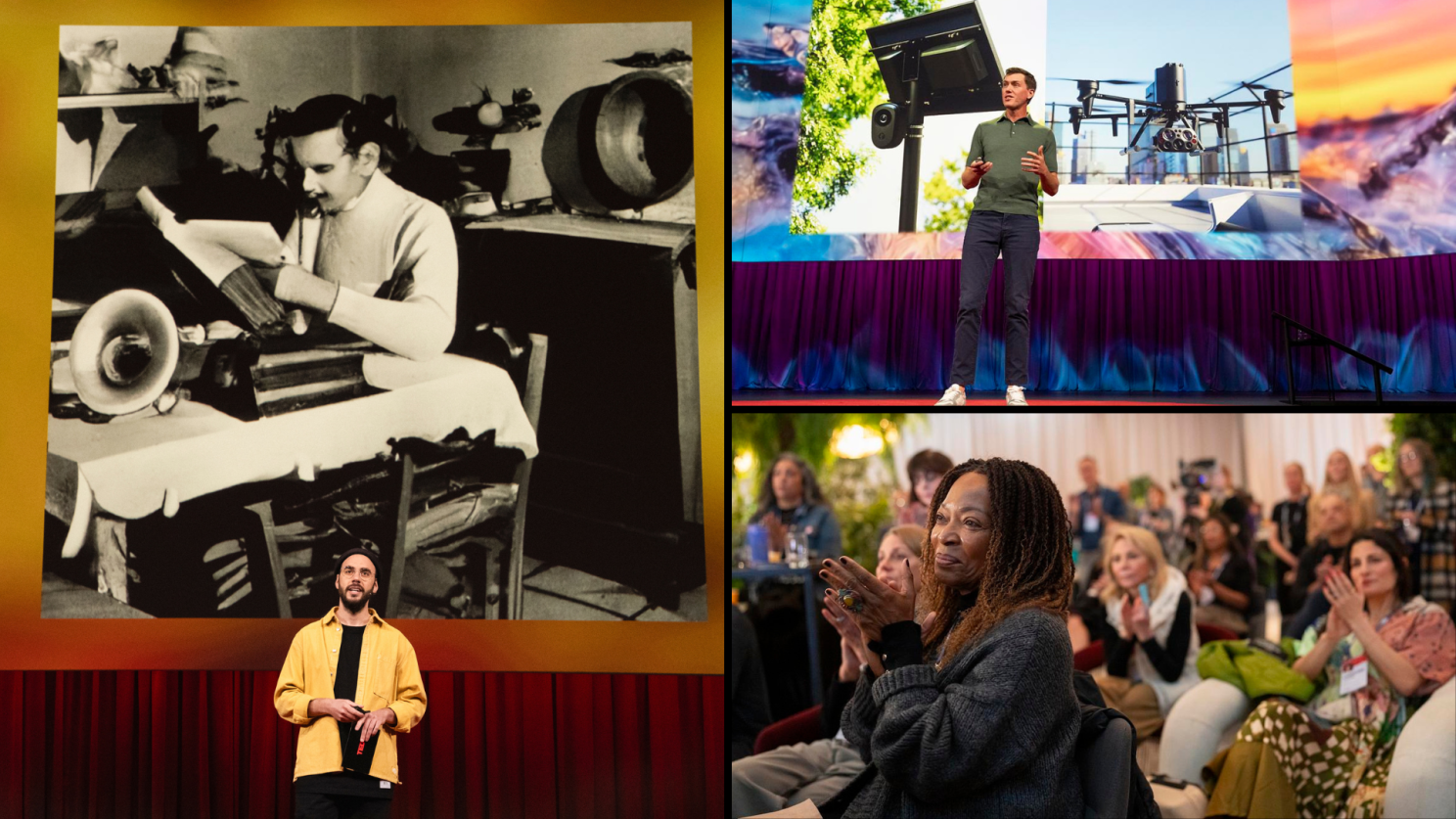
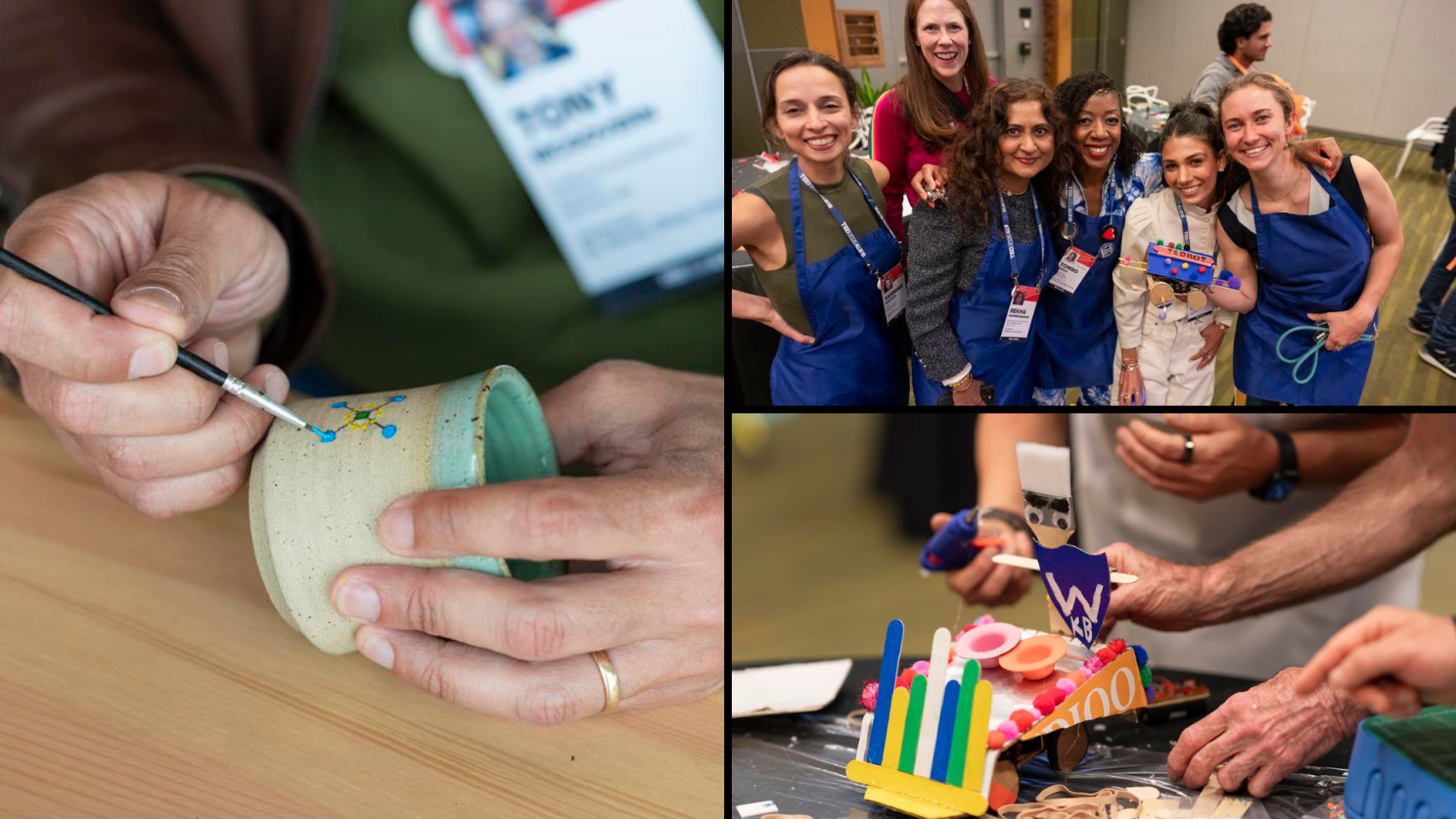
“I think of my role at TED as somebody who could be an antidote to all the heady stuff,” said Simone Giertz, an inventor, YouTuber, TED speaker and Discovery Session host at TED2026. “Just come in and work with your hands and paint cardboard for a while. It can kind of be a respite from everything else.”
In her Discovery Session, attendees are invited to build battle robots out of cardboard, then put them to the test in a fearsome battle (aka trying to push the other off a table). It’s a silly, joyful activity in between sessions of talks on some intimidating subjects — just one of many options around the conference. You can also paint a pot, try your hand at throwing clay on a wheel, watch a magic show or just sit and gaze at the majestic mountains (whose peaks finally made an appearance today!).
For Giertz, this type of playful human connection is essential. “I think communities where we can process what’s happening and our worries and fears and our hopes are really important,” she shared.
And at the end of the day, isn’t that what so many of us are seeking? Human inspiration, human stories, human creations. When people are exuberant about the capabilities of artificial intelligence, “it feels a little bit like watching somebody run really fast and being like, ‘Yeah, but do you know how fast a car can go?’” said Giertz. “It’s not really the same thing. I want to be impressed and amazed by other humans, and that is where I see the future heading.”
“I wish my algorithm was different,” said Giertz. “I’d love more dogs.” Me too, Simone. Me too.
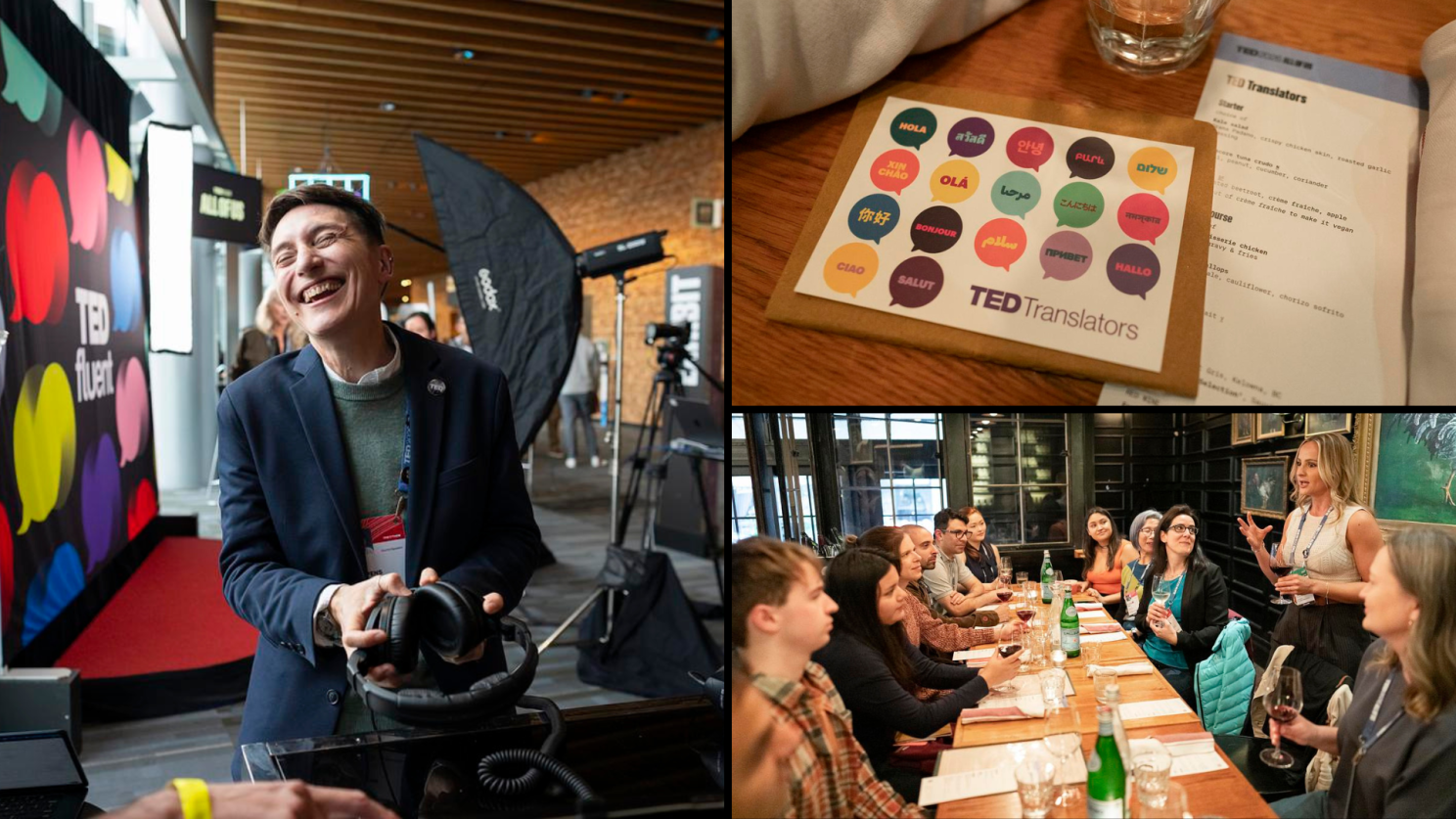
And sometimes technology that sounds scary can actually be incredibly connective. TED Fluent partnered with Panjaya AI to dub the talks of consenting speakers in 12 different languages, using new technology to change their voice and lips movement, making it appear they’re actually speaking the selected language.
At TED2026, attendees can give their own ten-second TED Talk and have it dubbed using this tech. I chose to create a short video for one of my best friends whose first language is Turkish. Seeing my mouth speak her language so fluently was a bizarre and exciting experience — and I can’t wait to send it to her (pretending to have magically learned Turkish overnight, obviously).
Language barriers are dissolving more and more, helping connection span the globe. When people can watch a TED Talk in their own language, the data shows they come back more often, stay longer and share more. In short: this technology is helping ideas that can change the world spread faster and farther. Special thanks to our TED Translators, the humans reviewing every single dubbed talk!
Big problems require creative solutions
Yiyun Kang, an artist and TED speaker, blends data and technology into her creations. “I don’t even know how to define what I’m doing,” she told me. “Is it art? Is it media art? Is it digital art? Is it scientific creativity? I don’t know. But I believe more and more we need creativity.”
While she said she’s terrified of how quickly technology is evolving, the fact it has democratized access to innovation is a positive. She seeks to balance the use of tech, avoiding social media but embracing where it can offer growth and possibility.
She put it best during her talk in yesterday’s midday session:
"I believe, with every fiber of my being, that we are all deeply, irrevocably entangled. Nature. Humanity. Technology. They are not separate entities. They are one. The world is not binary. It is not 'us' versus 'them,' or 'human' versus 'machine.' It is a vibrating network of infinite connections — and embracing this entanglement is the essential first step toward resolving the wicked problems of our time."
In the end, we’re all in this together
Ready to join the conversation? You can watch talks from Kang and others streamed live or on demand, anywhere in the world, anytime. Register for access with TED Live.
.jpg)